We develop statistical and machine learning methods for time-to-event data — from deep learning architectures to proper evaluation frameworks.
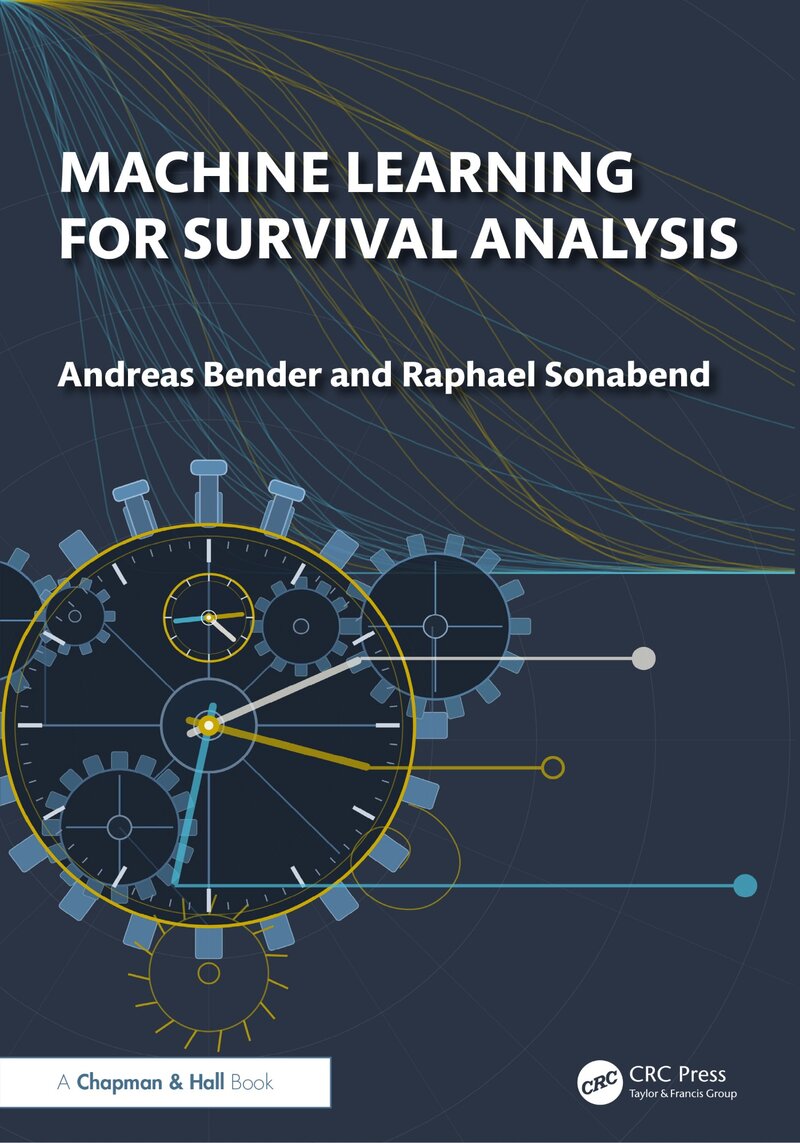
We investigate modern machine learning methods for survival and event-history analysis — bridging statistical rigor with scalable computation.
Neural network architectures for censored time-to-event data, including multi-modal and multi-state models.
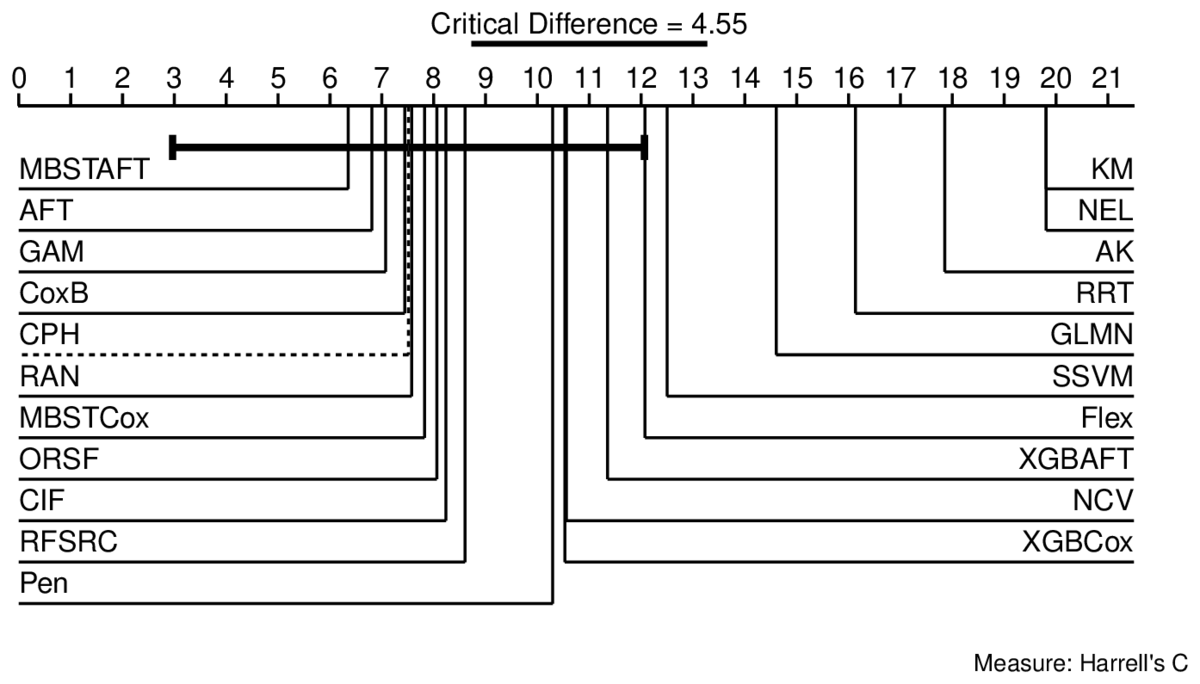
Proper scoring rules for survival predictions — understanding what we measure when we evaluate survival models.
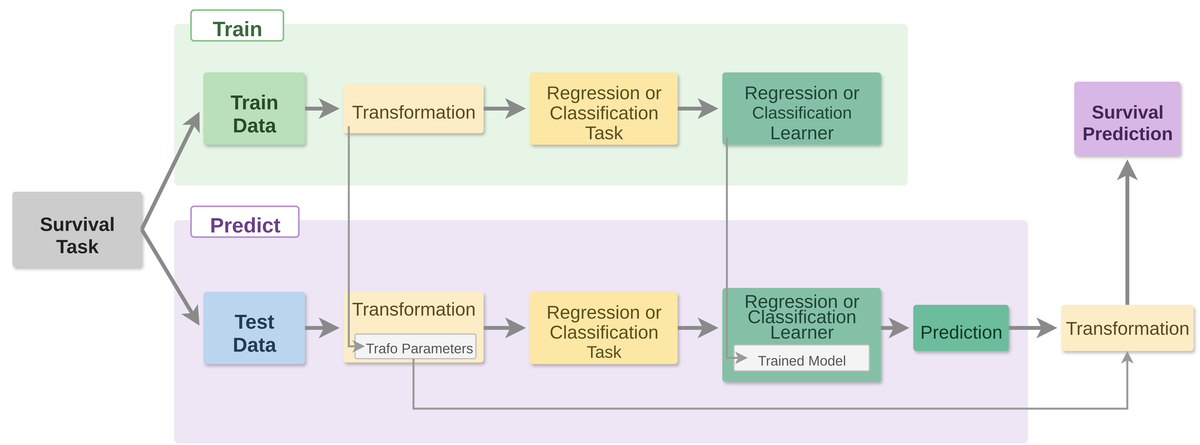
Transforming survival problems into standard regression or classification tasks to leverage existing ML toolkits.
Estimating individualized treatment effects in time-to-event settings using causal machine learning.
Flexible frameworks for modeling complex disease trajectories with multiple intermediate and absorbing states.
Generative models for survival data — new paradigms for simulation, augmentation, and prediction.
Researchers from multiple universities working together on survival analysis and machine learning.
Selected projects from our group, with code and data openly available.
A comprehensive review of deep learning methods for survival analysis — interactive companion website with model taxonomy and benchmark results.
Examining properness of scoring rules in survival analysis. When are popular evaluation metrics actually proper, and what are the implications?
Transforming survival analysis into standard regression or classification tasks, accompanied by extensive simulation and empirical benchmarks.
A curated collection of publicly available survival datasets, aggregated and standardized for ease of use in benchmarking and teaching.
Materials for the useR! 2024 tutorial on machine learning for survival analysis using the mlr3 ecosystem.
Applying multi-state models to longitudinal disease history data for understanding complex patient trajectories.
R packages maintained by our group for applied survival analysis and machine learning.
Piece-wise exponential Additive Mixed Modeling tools — flexible hazard modeling via the mgcv framework.
Probabilistic supervised learning for mlr3 — survival analysis, density estimation, and probabilistic regression.
A selection of recent works. See Google Scholar for a full list.
Department of Statistics
LMU Munich
Ludwigstraße 33
80539 Munich, Germany